Tuesday, September 26, 2006

The book

So the book is released. In some way it’s very much an eye opener. From now on the general cannot claim that he is ideologically on the same side as the rest of the world is concerned in this war on terror (WOT). He became allies with the US/sane world because, in his own word, “if we do not join them, can we confront them and withstand the onslaught? The answer was no”. As a matter of fact, he “war-gamed the United States as an adversary”. Then he/they figured out that it was like committing suicide. It would have been a very interesting scenario if the war games would have resulted in any other outcome. For example, if, say his country would have had .. maybe .. a 25% chance of coming around and defeating the mighty armies of the world – what would have he chosen then? Maybe then there would never have been an unwilling ally in this WOT and maybe his country would never had to answer all the hard question – like ‘why don’t you capture OBL’ or ‘why do you have thousands of terrorists camps’ or ‘why do you let militants cross over to your territory’ and ‘why do you have thousands of madrasas teaching hatred for others’ AND it would have been much easier for the rest of the world as well – they would not be hard pressed to think which side, truly, is he on?

So the next time you say that you are not on the side of the terrorists and fighting with the world as allies in this unconventional war, watch out – we know whose side are you really on and why you are sitting on the same table as us.

Here is an excerpt from the book:

My decision was based on the wellbeing of my people and the best interests of my country — Pakistan always comes first. I war-gamed the United States as an adversary. There would be a violent and angry reaction if we didn’t support the United States. Thus the question was: if we do not join them, can we confront them and withstand the onslaught? The answer was no, we could not, on three counts.

First was our military weakness as compared with the strength of the United States. Second was our economic weakness. We had no oil, and we did not have the capacity to sustain our economy in the face of an attack. Third, and worst of all, was our social weakness. We lack the homogeneity to galvanise the entire nation into an active confrontation. We could not endure a military confrontation with the United States from any point of view. The ultimate question that confronted me was whether it was in our national interest to destroy ourselves for the Taleban. Were they worth committing suicide over? The answer was a resounding no.

In some ways I think he does not even know what he is writing - and for whom – for surely – there are 2 very distinct groups of people who will read this book. One at home and the other outside. Instead of doing the book tour in the US, he should have done it in his hometown – and if I were him – I would have done something, anything that would have prevented anybody else getting a hand on the book. This book is purely meant to be for local consumption – to bolster his image, to improve the image of his country in his own people’s eyes – a lot to do with self esteem – really.

Sunday, September 24, 2006

Fact Check

So.. let’s get a fact check here.

A military general who takes over a country’s administration in a coup writes a book about how he did it all.

- About how he planned and launched an attack and then retreated (due to foreign pressure, after obtaining his objective) on a neighboring country – and then brags about it in the book.

- Calls secessionist movement in his own country 'terrorism' and the same in his neighbor’s country ‘freedom struggle’

- Blames the neighboring country’s Prime Minister (PM) ‘squarely’ for any failure of peace talks.

- Says that the power of the current PM of the neighboring country has ‘diminished’as a result of the country's establishment.

- Bashes all the other previous rulers of his own country.

- Justifies why he overthrew the previous, elected ruler.

- Advertises about his book with the President of US standing next to him.

- Creates media hype by declaring that a high up in the State Department threatened to bomb his country ‘back to the stone age’ – three days before his book is due out.

So – he goes and writes a book about all these characters. He, never himself elected to any office in the government – collects cool million dollars for this book.

All the other people he talks about – could never get their grey cells together to write a line about their own experiences with the dictator amongst other things.

Cheers general – you are the man.

Tuesday, September 19, 2006

Is Lalu changing the Railways?

Seems like he has found his niche – after all.

He has started from the top – where it should have been started.

The ministers, a plethora of them, their family, their friends – everybody should be given a quick fact check on who they are – not who they think they are. Ok now I am sounding like Rumsfeld.

Soren's wife, son caught without ticket, fined

By IE

Wednesday September 20, 12:47 AM

Following the directives of Railway minister Lalu Prasad Yadav to initiate action against all the ticketless travelers, including politicians, bureaucrats and others, Railway staff at Kanpur detained three members of Cabinet Minister Shibu Soren's family and fined them.

According to reports, Railway staff detained Soren's wife, son and a relative, who were traveling on New Delhi-Howrah bound Rajdhani Express (2302) on Railway passes of the minister and MP S Marandi late on Monday night.

Railway staff at Kanpur got information about three passengers traveling on the passes issued to MPs. Under the leadership of Assistant Commercial Manager (ACM) Rajesh Kumar Srivastava, ticket checking squad gheraoed the first AC coach of Rajdhani Express on platform number 6. Railway Protection Force (RPF) and Railway Police Force (RPF) were also deployed at the platform in order to prevent any untoward incident.

It was found that Ruby Soren, wife of Shibu Soren, his son Swajit Soren and a relative Mini were occupying seats in cabin 'A'. When the squad enquired about their status and asked them to deboard the train, they got annoyed and warned the railway staff of dire consequences. Later, they accepted that they were traveling without ticket but were refused to pay the penalty.

Ruby Soren also allegedly misbehaved with the Railway staff and warned them of dire consequences.

Srivastava, then, directed the female staff and GRP constables to forcibly bring Ruby and Swajit down. Realising that there was no escape, they paid the penalty of Rs 14,260, after which they were allowed to continue their journey. Talking to Indian Express, Srivastava said that the passengers were traveling on MPs' identity card numbers 159 and 303. "They were considered ticket-less and therefore railway realized fine from them," he added.

Meanwhile, Ruby Soren said that her husband had to come along but could not travel due to some engagement. She also said that Railway staff misbehaved with her and co-passengers. However, the train got delayed by 20 minutes due to scene created by ticket-less passengers.

In another incident, two ticket-less persons were caught traveling in first AC coach with BSP MP from Eastern UP Kailash Yadav in Delhi-bound Shiv Ganga Express late on Monday night. When the railway staff detained them, they warned the staff of complaining to railway minister Lalu Yadav. However, when the railway squad directed the GRP to put both ticketless persons in jail, they paid Rs 16,335 as penalty.

Monday, September 04, 2006

Sad Day


Today I woke up to read about the sad demise of Steve Irwin – who died doing what he loved – and killed by one who he liked. I was a huge fan of him and truly and greatly admired his free will and contagious enthusiasm for life and all things living. His confidence was legendary as was evident by his dress – khaki shorts and shirts – which he discarded for no one – not even for heads of state.

We will miss you Crocodile Hunter.

Monday, August 21, 2006

Ustad Bismillah Khan


“Build me my ghats, the river, the life as I know it, in the backyard and may be I will stay back”

-Ustad Bismillah Khan (1916 – 2006) - turning down an offer of an American connoisseur to stay in the US

Wednesday, August 16, 2006

Wazzup Macaca

Following American politics is so .. how should I say it .. educating – or entertaining – or both.


Day before yesterday – I never knew that Macaca existed.

Today I know that Macaca is not just a word that means a genus of monkeys in Africa – but is also a word made up by My + Caca.

My is my, Caca is kuku, you know, yes that.

So Sidhart, you have become the caca of Allen. Hmm .. but you have caused the downfall of a young/bright/racist senator. But then again – maybe not. Can’t trust the voters here.

What’s with the haircut anyway?

BTW Maybe Senator Allen is a Mallika fan!

After all – Mallika --> Mallaka --> Makaka.

I think he is getting targeted unfairly. And maybe he should stop apologizing.

Thursday, August 03, 2006

Heat Wave!

As the eastern seaboard is getting baked, here are some tips on how to remain safe and enjoy the ‘sunny’ weather.

  • Do not leave infants, children, or pets in a parked car, even for just a few minutes. Car interiors can quickly heat up and cause serious injury or death.
  • Drink plenty of fluids, preferably water but avoid alcohol and large amounts of sugar. Do not wait until you are thirsty to drink.
  • Heavy sweating removes salt and minerals from the body. If you exercise or work outside, drink two to four glasses of cool, non-alcoholic fluids each hour. A sports beverage may replace the salt and minerals you lose in sweat. However, if you are on a low-salt diet, talk with your doctor before drinking a sports beverage.
  • Wear lightweight, light-colored, loose-fitting clothing. Protect yourself from the sun and keep cool by wearing a wide-brimmed hat along with sunglasses and by putting on sunscreen of SPF 15 or higher 30 minutes prior to going outside.
  • Stay indoors and if at all possible, in an air-conditioned place. If your home does not have air conditioning, try to find a neighbor, relative or public place that does. Just a few hours spent in air conditioning can help your body stay cooler when you go back into the heat.
  • Take a cool shower or bath.
  • Avoid, as much as possible, using your stove and oven. This will help keep cooler temperatures in your home.
  • If you are 65 years of age or older, have a friend or relative call to check on you twice a day during a heat wave. If you know someone in this age group, check on them at least twice a day.
  • If you must be outdoors, try to limit your outdoor activity to morning and evening hours. When working in the heat, have plenty of water available and monitor the condition of your co-workers and have someone do the same for you. Heat-induced illness can cause a person to become confused or lose consciousness.

Friday, July 21, 2006

Manoj Night Shyamalan


Its fascinating to watch and observe the fights critics and fans/moviegoers are having over the latest movie (Lady in the Water) from Manoj. Sounds a wee bit weird to start off with Manoj and not with Night or M. Night or just Shyamalan. Who knows why he doesn’t prefer to be called what he was supposed to be called.

Well – what’s in a name – as long as you are good at what you do.

There are distinctively 2 camps of people – he would say – in this world. Those who can see dead people and those who cannot – just kidding

Rather – those who like him and those who despise him – and I don’t mean like – ‘hey I don’t like the movies he make’ over a cup of tea kinda hate – but like ‘hey I’ll suck his blood dry’ hate. I don’t know – I like his movies – though I haven’t seen Signs – but the other 3 were nice and watchable films. People don’t usually have any problem with Sixth Sense – so let’s leave that out – but Unbreakable and The Village were not completely trash and were actually, quite enjoyable. His way of story telling is kind of weird and, I must say, unique – which might be a reason critics absolutely love to hate him. After Sixth Sense, they all compared him to the next Spielberg – so he did have the bars raised pretty high for him. I must say, though, that he is one of the very few in the industry today who has had 4 movies in a row that had some ripple or the other.

For Lady in the water, it’s a pretty much split decision. IMDB, where reviews are by readers have a much higher rating than Rotten Tomatoes – which tracks the professional movie critics – so early indications are that there is a huge divide b/w the critics and the end user – well - numbers will tell who’s right – as for me – I would be going to see it soon – and will write about what I saw.

Monday, July 17, 2006

Here's more proof of global patronage

Here's more proof of global patronage for terrorists wreaking havoc in India and South Asia.

http://www.theaustralian.news.com.au/story/0,20867,19825601-2703,00.html

Sunday, July 16, 2006

NYTIMES gets it wrong...

There was a time when I read the New York Times with some awe and much respect. Then they hired Somini Sengupta. There are reporters who report an incident and quote people and do such reporter like stuff - and then there are reporters who feign as being reporters – but really think that they are some analysts who should put a spin on straight forward things so readers can take their hats off, slide their hands on their bald heads and go – rreeeeeeallllyyyyyyyy – now I get it!

She, unfortunately, falls into the second category.

Just look at her analysis in her article “India’s Prime Minister Scolds Pakistan”,

She says

"Despite the parallels of the Mumbai blasts to the London and Madrid bombings, there is widespread agreement in this country that the roots of India’s recent experience with terrorism are local, not global."

Really? Lets look at what we know:

There is irrefutable (or at least strong) proof that the Lashkar e Taiba (LET) and the Student Islamic Movement of India (SIMI) are involved. She says so herself here. The world knows that LET has bases in Pakistan and SIMI gets help from them and extremist organization in Bangladesh. Hence if the bombers in the London train bombings get training from terror camps in Pakistan and go back to London – that’s global terrorism – but if Indian born SIMI activists get LET’s and other terror organization’s help with financial help from Riyadh and Kuwait in pulling of bombings of this magnitude in Mumbai – its local terrorism.

So is it India’s fault that the world’s sole wholesale supplier of terrorism is in its backyard?

Another case in point is in her introductory piece about the bombings ”Series of Bombs Explode on 7 Trains in India, Killing Scores”, she mentions:

"It would not be the first time that Kashmiri militant outfits, which India says enjoy the support of rival Pakistan, have struck on Indian soil. The most serious of them, an attack on the Indian Parliament in the capital, New Delhi, in December 2001, prompted a military standoff between the nuclear-armed neighbors. India blamed the Pakistan-based militant group Lashkar-e-Taiba."
If she did her research before writing, she would find that 99% terrorist acts have a Pakistani connection as proven by the Akshardham attacks.

While this attitude by the mainstream media in the US is not completely new or born with Mr. Sengupta and has followed what the official US position was till only a few years ago (more precisely before 9/11), it must be pointed out that the US has changed its policies – and has included any acts of terror by any organization as terrorism as pointed out by Wider War on Terror.

"One indication was the nature of the immediate statement of support for India from US Secretary of State Condoleezza Rice. She not only condemned the bombings and expressed sympathy for victims but said: "The US stands with India in the war on terror." This is significant because the US has previously not been inclined to include terrorist attacks in India, Israel or Russia as part of the overall war on terror."

Unfortunately, Ms. Sengupta has missed that memo. When asked, she would only express sympathy for the victims.

Wednesday, July 12, 2006

Who did it?

All pointers point to SIMI (Student Islamic Movement of India)

Don’t know them?

Read about them here: http://www.hindustantimes.com/news/5922_1742653,0015002500030000.htm

And

http://timesofindia.indiatimes.com/articleshow/1742863.cms

http://www.time.com/time/world/article/0,8599,1212590,00.html

http://www.hindustantimes.com/news/5922_1742889,0015002500000000.htm

and here is a story which say that Mulayam Singh Yadav is fighting to release all SIMI operatives that his state has arrested!

How patriotic can he get? But then again – you don’t have to be patriotic to get the votes in India – you just grab them whichever way you can - to hell with the country.

http://timesofindia.indiatimes.com/articleshow/1742869.cms

And read this – SIMI is more than just active in UP. It’s even planning an attack close to August 15.

http://www.dnaindia.com/report.asp?NewsID=1041308

God save us all.

Carnage in Mumbai

Once again the ugly side of humanity has prevailed. India needs to be ready for things like these in the future and not just hope that these wont happen to us.

Terrorism is the bane of our times – I read somewhere – so come to terms with it – put CCTV in every public nook and corner where there is any possibility of any nuisance. Check every bag that comes in a crowded place. Train and equip law enforcement personnel with the latest – not just a stick and a cap.

The world is slowly waking up to terrorism in India and the international media is quite awake and realizes that India is not any different to London and Madrid and NY.

Here are some you MUST read.

http://www.timesonline.co.uk/article/0,,542-2265849,00.html Outrage in Bombay

http://www.nytimes.com/2006/07/12/opinion/12fernandes.html India’s Indestructible Heart

http://www.washingtonpost.com/wp-dyn/content/article/2006/07/11/AR2006071101205.html How Much Will India Endure?

http://www.latimes.com/news/opinion/editorials/la-ed-india12jul12,0,4492414.story?coll=la-news-comment-editorials India: Bombed but Unbowed

http://seattlepi.nwsource.com/opinion/277178_indiaed.asp India Bombings: Same lessons

http://www.theaustralian.news.com.au/story/0,20867,19770035-28737,00.html#

Wider war on terror


Wednesday, May 10, 2006

MMM...Mangoes


I can smell them – cant you?

Read more about Mango Mania in India

Tuesday, April 25, 2006

Flox, Tulips and the butterfly..


Looks like the HP color printer ad so much at the Washinton Post site. Sarah P. Duke Gardens, NC. Click on the photo to enlarge.Posted by Picasa

More Tulips!


Some nice colors. And good depth. Posted by Picasa

Duke Gardens..


Tulips, Japanese Maple, and a ton of other beautiful flowers and trees. Spring is the season to be in NC! If you can handle the pollen :- Posted by Picasa

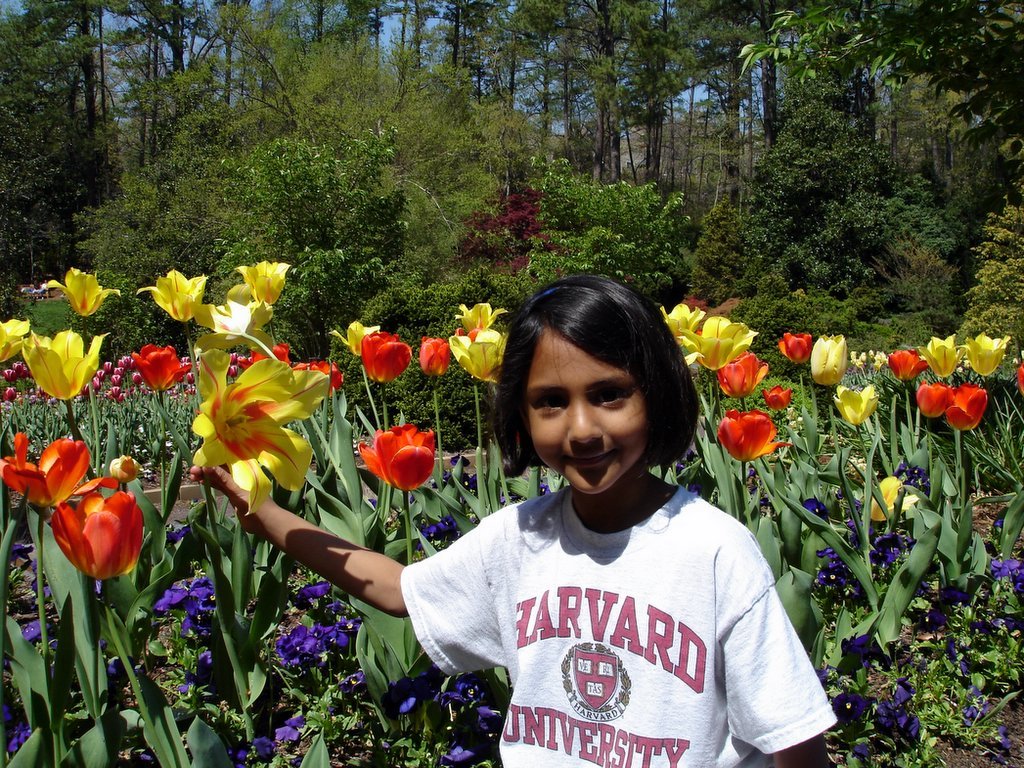
Tanya Posing at Duke Garden.


The flower is almost as big as her face! Duke Gardens, Durham, NC. Unfortunately, Durham is in the news for all the wrong reasons these days. Click on the photo to enlarge.Posted by Picasa

Thursday, April 13, 2006

Google, Yahoo and beyond..

Like a breath of fresh air – they keep coming at you. Un-relentlessly, without any remorse, with simple punches, from the right and left. Keep you wanting for more… and more.. Yes you are right – I am talking about Google. Today they released their calendar. Its so simple and elegant – that the only word that came out of my mouth was ‘wow’.

The world of Google started with – of course, Google. Then they hit us with gmail – and then again with Google talk, Google videos, yada yada. One thing that’s common with all these applications is that they are ALL simple to use – but powerful nonetheless.

The calendar is no different. Here is another suggestion to make it even better. Make use of the ‘tab’ phenomena more. In the calendar, on the left hand side, there are some tabs for news, gmail etc – make them open in the same window – not a new one.

BTW I used the phone out feature from yahoo yesterday – ooooooh.. sweet as honey. At 12 cents to India – it’s the best deal yet from any good company. (Reliance comes up to be about 14.4 cents if you do the math). The quality is great considering its VOIP and the ease of setup etc is virtually .. I’m confusing myself now – I should just say – it was easy to set it up.

I think Skype is history.

One thing I cannot get is that it charges all of 1 cent to Canada, 1.5 cents to Australia – but 2 cents to calls made to a phone in the US! Hmm..

Here’s a prediction. In another 6 months – we are going to see google talk do this VOIP thingy as well – I mean PC to phone (they already do VOIP for their talk program), anyway, so they will come up with their own phone out thing – only difference – it will be of course – FREE. Yup. Let me say that again – you can make a call to a phone from your PC for FREE. How they are going to do this – you will no doubt ask? Well - They would provide a ‘premium’ service where users can pay for a phone call – just like what yahoo is doing it – but they will also have a free service – for cheepos like us. All we would have to do before making a call would be to see (or see and listen to) an ad on our computer for maybe 30 sec or so. I think they will get tons of ads for this kinda stuff – don’t you? You can bypass their ads using their premium service.

So there you go – Google stock jumped another 30 bucks :) . If only I had 10 of those.

Thursday, April 06, 2006

Here & there: India - metros and trains - Razi Azmi

Here is the second in a series of four articles about a Pakistani writer’s trip to India. The original can be seen here.

--------------------------------------------------------

Thursday, March 23, 2006

William Dalrymple recently wrote that one ought to visit Bihar if one wished to see India as a failed state, adding that if one wanted to see how India will look if it succeeds, one should go to Bangalore instead. Perhaps, time will tell

Kolkata has an underground metro train line with 17 stations extending over 16 kilometres. Service is cheap, frequent and punctual. In contrast to the city above them, the underground trains and stations are quite clean. The metro, India’s first, used to evoke pride among the people of Kolkata, but now it is no match for the spick and span, ultra-modern and larger metro system of Delhi.

Metro or not, Kolkata’s decline commenced when the British moved the capital to Delhi in 1912. The partition of Bengal in 1947 (resulting in the separation of East Bengal, now Bangladesh) hastened the decline, which was aggravated by decades of Communist rule.

If there is one thing that can definitely make the Bengalis of Kolkata and West Bengal (and, to a lesser extent, Bangladesh) proud, it is their affinity for literature, dance and drama. Many years ago, a special issue of the Far Eastern Economic Review had commented that only in Kolkata were you likely to meet a police officer who could discuss Shakespeare and Tolstoy.

When I mentioned this to a friend, he confirmed its veracity from his personal experience. After the Bangladesh war of 1971 he had been arrested and taken to the police station chief in a border town of West Bengal for illegally crossing the Bangladesh-India border. On seeing that he was reading a novel by Tolstoy, the chief ordered his immediate release! But the captor didn’t let his prisoner go until the two had exchanged a word or two about Tolstoy.

Kolkata has been made famous by Satyajit Ray, one of the best film directors the world has produced. In 1992, on his deathbed, he was honoured with a Lifetime Achievement Special Oscar.

If their metro train and cultural accomplishments give pride and joy to the people of Kolkata their man-drawn rickshaws are a blight. Not many are left, and they are confined to a small section of the city, but it is a pathetic sight to see a human being, tethered to a two-wheeled rickshaw much like a horse, running on the street pulling passengers seated at the back.

By Indian standards, Kolkata only gets a trickle of Western “backpacker” tourists and most of them arrive only in transit from Bangkok heading for other destinations in India. The many hotels and restaurants in the city thrive on account of visitors from neighbouring Bangladesh — businessmen, tourists and students.

Thousands of Bangladeshi students pursue higher studies in India and many Bangladeshi colleges and universities take their students on “study trips” to India. Kolkata is not only a point of entry into India for Bangladeshis, but it is for Bengalis everywhere what Lahore is to Punjabis. It is their cultural Mecca.

Motorways and roads are being constructed throughout India at a frenetic pace. Their centrepiece is the oddly named Golden Quadrilateral connecting the four so-called mega-cities of Delhi, Mumbai, Kolkata and Chennai.

There are many private airlines operating in India, Jet Airways, Air Sahara, Deccan Air, Spicejet and Kingfisher being the major ones with large fleets of modern planes. The traffic at Delhi airport (India’s second busiest, after Mumbai) is comparable to some Western airports: a steady stream of planes landing and taking off. Thirty-five airlines fly to Delhi. There are over two dozen flights daily between Delhi and Mumbai alone.

Most Indians can’t afford to fly and, owing to the huge distances, trains remain by far the principal mode of long-distance transportation. Given the high demand for railway tickets, buying one usually entails standing in long queues and well in advance of the travel date. Ticketing is fully computerised and tickets may be bought anywhere in India from any point of origin to any destination.

The Indian railway system as a whole is a wonder. It is a massive network, the world’s largest, inherited from the British but hugely expanded and improved in the last 50 years. Single tracks have been turned into double tracks, lines have been electrified and many metre gauge lines have been converted to broad gauge.

The number of trains that run on the tracks is just unbelievable. Excellent long-distance overnight trains named Rajdhani Express connect the national capital with virtually every distant state capital. Comfortable daytime short-haul trains called Shatabdi Express connect the capital with nearer destinations such as Lucknow, Agra, Jaipur, Amritsar and Chandigarh.

Trains may run late, they may be overcrowded, but they run with a frequency and cover distances that are mind-boggling. But derailments and accidents are rather frequent and the human toll is often high. Ignorance and human error are to blame as much as technical failure, ageing equipment and infrastructure problems.

I will be less than frank if I did not tell readers that my first railway journey in India 15 years ago was a disaster. As I was sleeping on an upper birth in an express train from Hyderabad to Chennai, I woke up in shock in the middle of a very dark and wet night about halfway through my journey. A thunderous roar and shaking confirmed my worst fears: my train had derailed.

Slowly but surely my coach overturned and fell on its side. Although a total of eight coaches overturned injuring many passengers, fortunately no one died. I escaped without a scratch and arrived at my destination safe and well, though a bit shaken, about 14 hours late. As reported in the next day’s newspaper, the derailment was caused by “metal fatigue” of the track when the train was travelling at a speed of 80 kilometres per hour.

The accident had occurred at about 2:45am. The relief train arrived nearly three hours later. By then all passengers, some screaming from pain, had been pulled out of the overturned coaches by villagers. When the relief train did arrive, the “rescuers” had little to do except transport the passengers to the nearest station.

Other than this “minor inconvenience”, my experience of the Indian railways has been pleasant. I have travelled from Mumbai to Delhi, Kolkata to Varanasi, Allahabad to Delhi via Lucknow and Jaipur to Delhi via Agra, in addition to Hyderabad-Chennai.

Indeed, a journey on the Indian railway is likely to be an educative experience in multiculturalism, human camaraderie and plain efficiency at a low cost. I must admit, though, that I travelled first class most of the time, with the added privilege of booking my place on the trains through the special facility for foreigners.

Indian trains are India in microcosm, both for better and worse. If the state of the state of Bihar is any guide, the decision to make Laloo Prasad Yadav the minister of railways doesn’t bode well. During the 15 years that Yadav ruled Bihar directly or through his wife and cronies, it descended into violence and lawlessness.

The well-known writer on India, William Dalrymple, recently wrote that one ought to visit Bihar if one wished to see India as a failed state, adding that if one wanted to see how India will look if it succeeds, one should go to Bangalore instead.

Perhaps, time will tell. But the Indian railways are too serious a business to be left in the hands of any politician, let alone one with Yadav’s reputation.

This is the second part of a series of articles. The writer can be contacted at raziazmi@hotmail.com

--------------------------------------